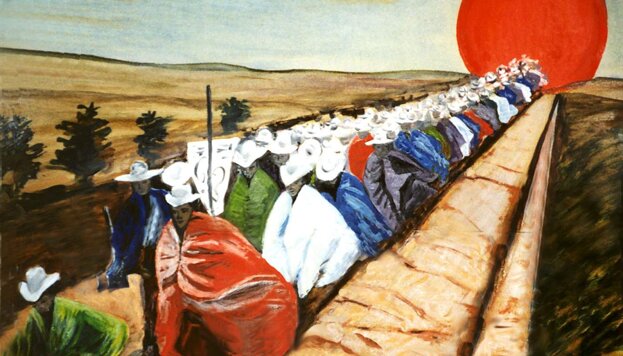
Migrants, yesterday and today

Migrants with
the migrants
Before being for migrants, we are called to be with them: migrants with migrants. Our vocation leads us to value the experience of sacrifice, risk, and poverty linked to the story of migration, which awakens the longing for new, more open and supportive relationships, and to welcome the deep bonds that unite people beyond all borders.
The spirituality of the exodus opens up, in every relationship, environment, and situation, unexpected spaces for love for everyone and for each person, valued in their uniqueness.
A magnifying glass
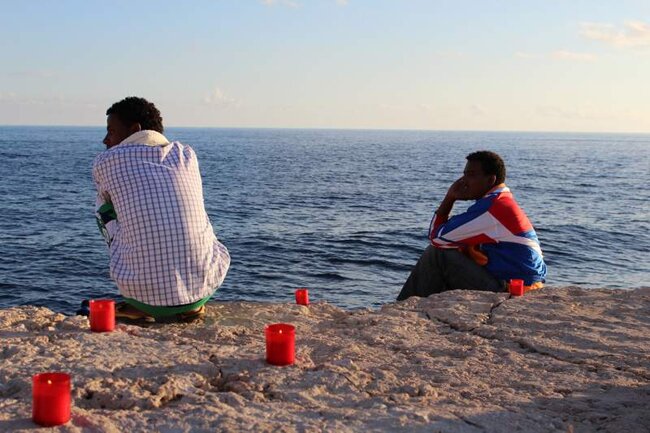
Migrations are a complex reality, which cannot be addressed with a sectoral approach. In fact, they are like a great magnifying glass through which the world comes into focus with all its dramatic problems, its injustices, the difficulties of human coexistence, but—as Pope Francis writes—“also the aspiration of humanity to live in unity while respecting differences, welcome and hospitality that allow for the fair sharing of the earth’s goods, the protection and promotion of the dignity and centrality of every human being.”


different
paths ...
to cross borders
Today's migrations are a multifaceted phenomenon, involving many different groups of people: highly qualified professionals, international students, people seeking better living and working conditions, refugees fleeing wars and persecution, and those displaced for environmental reasons. Some migrate legally and others are forced into illegality. Obviously, people's destinies are very different.
Humanity appears divided into two categories: the new supranational elites of travelers (e.g.: managers, specialists, artists, athletes, scientists), who can travel across borders and settle in the most diverse countries, who can reach all places without paying attention to borders and boundaries, and the vast majority of people who, if they move, do so to survive, risking their lives to cross borders, or remain anchored to a territory, perhaps within confined places such as refugee camps.
Freedom of movement, in fact, which today applies to financial goods, products, and services, is not, however, universally recognized for people. Everywhere in the world, insecurity and conflicts linked to globalization generate fear of migrants among local populations and lead governments to enact restrictive or selective migration laws.
As a consequence, we are witnessing the phenomenon of irregular migration, which has now become structural in all areas of the world. International human trafficking organizations especially profit from this, while those who pay the consequences of illegal border crossings are migrants and refugees, sometimes with their very lives.
Even more inhumane is the so-called trafficking of persons, which affects hundreds of thousands of men, women, and children every year, forced into prostitution or servile labor in conditions of real slavery.
A single ship
Human mobility concerns everyone today:
migrants and natives and represents an important component
of the growing interdependence between nations.
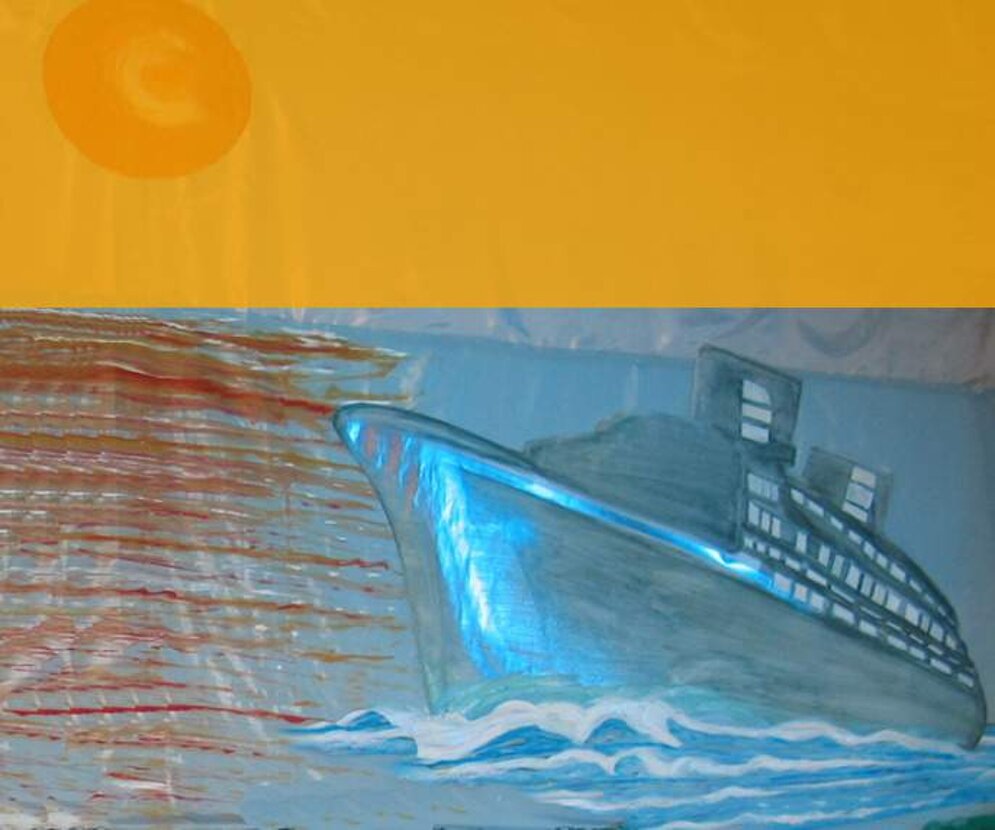
Migratory movements highlight that we all "travel on the same boat,"
that is, we live in a single world.
Our destiny is increasingly linked to the destiny of all.
The insights of G.B. Scalabrini remain, therefore, more relevant than ever
and motivate the Scalabrinian Family to commit
to constructive coexistence among differences within society,
for an authentic communion in the Church
and for the promotion of justice and peace in the world.
Faces, stories, expectations
Emigration is made up of many figures, statistics that chase each other, but above all it is made up of faces, of stories, of expectations... and of many "whys?", which refer to the current dramas of humanity. In the era of globalization, the economy increasingly tends to cross the borders of a single country: economic forces, free from any constraints imposed by the policies of national states, act autonomously.
The current global economic order does not suggest greater justice, democracy, or redistribution of wealth. The spread throughout the world of a single homogenizing culture, which puts profit and the law of the market at its center, is matched by the rise of new totalitarian ideologies, which draw nourishment from religious fundamentalism and the fanatical retreat into one's own ethnic roots.



Push factors
and pull factors
The current and growing drive to emigrate is therefore caused by the increase in social and economic disparity between the North and South of the world, the lack of prospects in education and employment for many young people, natural and ecological disasters, the demographic imbalance between different continents, wars, political, ethnic and religious persecution, terrorism, and the violation of human rights.
No less strong than the push factors are the pull factors that awaken in many the desire to leave: the spread through the media of the model of Western affluent society, the search for security and freedom, the call of compatriots who have already emigrated, the recruitment by human trafficking organizations.
At the same time, international competition for the recruitment of high-level technicians and professionals gives rise to skilled migrations that impoverish the countries of origin of the personnel necessary for economic and social progress.

Links:
E-mail:
Follow us on:
© Secular Scalabrinian Missionaries - 2022